
Recombinant Mouse ELAV-like protein 4 (Elavl4)
-
中文名稱:小鼠Elavl4重組蛋白
-
貨號:CSB-YP717224MO
-
規(guī)格:
-
來源:Yeast
-
其他:
-
中文名稱:小鼠Elavl4重組蛋白
-
貨號:CSB-EP717224MO
-
規(guī)格:
-
來源:E.coli
-
其他:
-
中文名稱:小鼠Elavl4重組蛋白
-
貨號:CSB-EP717224MO-B
-
規(guī)格:
-
來源:E.coli
-
共軛:Avi-tag Biotinylated
E. coli biotin ligase (BirA) is highly specific in covalently attaching biotin to the 15 amino acid AviTag peptide. This recombinant protein was biotinylated in vivo by AviTag-BirA technology, which method is BriA catalyzes amide linkage between the biotin and the specific lysine of the AviTag.
-
其他:
-
中文名稱:小鼠Elavl4重組蛋白
-
貨號:CSB-BP717224MO
-
規(guī)格:
-
來源:Baculovirus
-
其他:
-
中文名稱:小鼠Elavl4重組蛋白
-
貨號:CSB-MP717224MO
-
規(guī)格:
-
來源:Mammalian cell
-
其他:
產(chǎn)品詳情
-
純度:>85% (SDS-PAGE)
-
基因名:
-
Uniprot No.:
-
別名:Elavl4; HudELAV-like protein 4; Hu-antigen D; HuD; Paraneoplastic encephalomyelitis antigen HuD
-
種屬:Mus musculus (Mouse)
-
蛋白長度:full length protein
-
表達(dá)區(qū)域:1-385
-
氨基酸序列MEWNGLKMII STMEPQVSNG PTSNTSNGPS SNNRNCPSPM QTGAATDDSK TNLIVNYLPQ NMTQEEFRSL FGSIGEIESC KLVRDKITGQ SLGYGFVNYI DPKDAEKAIN TLNGLRLQTK TIKVSYARPS SASIRDANLY VSGLPKTMTQ KELEQLFSQY GRIITSRILV DQVTGVSRGV GFIRFDKRIE AEEAIKGLNG QKPSGATEPI TVKFANNPSQ KSSQALLSQL YQSPNRRYPG PLHHQAQRFR LDNLLNMAYG VKRLMSGPVP PSACPPRFSP ITIDGMTSLV GMNIPGHTGT GWCIFVYNLS PDSDESVLWQ LFGPFGAVNN VKVIRDFNTN KCKGFGFVTM TNYDEAAMAI ASLNGYRLGD RVLQVSFKTN KAHKS
-
蛋白標(biāo)簽:Tag?type?will?be?determined?during?the?manufacturing?process.
The tag type will be determined during production process. If you have specified tag type, please tell us and we will develop the specified tag preferentially. -
產(chǎn)品提供形式:Lyophilized powder
Note: We will preferentially ship the format that we have in stock, however, if you have any special requirement for the format, please remark your requirement when placing the order, we will prepare according to your demand. -
復(fù)溶:We recommend that this vial be briefly centrifuged prior to opening to bring the contents to the bottom. Please reconstitute protein in deionized sterile water to a concentration of 0.1-1.0 mg/mL.We recommend to add 5-50% of glycerol (final concentration) and aliquot for long-term storage at -20℃/-80℃. Our default final concentration of glycerol is 50%. Customers could use it as reference.
-
儲存條件:Store at -20°C/-80°C upon receipt, aliquoting is necessary for mutiple use. Avoid repeated freeze-thaw cycles.
-
保質(zhì)期:The shelf life is related to many factors, storage state, buffer ingredients, storage temperature and the stability of the protein itself.
Generally, the shelf life of liquid form is 6 months at -20°C/-80°C. The shelf life of lyophilized form is 12 months at -20°C/-80°C. -
貨期:Delivery time may differ from different purchasing way or location, please kindly consult your local distributors for specific delivery time.Note: All of our proteins are default shipped with normal blue ice packs, if you request to ship with dry ice, please communicate with us in advance and extra fees will be charged.
-
注意事項:Repeated freezing and thawing is not recommended. Store working aliquots at 4°C for up to one week.
-
Datasheet :Please contact us to get it.
產(chǎn)品評價

靶點詳情
-
功能:RNA-binding protein that is involved in the post-transcriptional regulation of mRNAs. Plays a role in the regulation of mRNA stability, alternative splicing and translation. Binds to AU-rich element (ARE) sequences in the 3' untranslated region (3'UTR) of target mRNAs, including GAP43, VEGF, FOS, CDKN1A and ACHE mRNA. Many of the target mRNAs are coding for RNA-binding proteins, transcription factors and proteins involved in RNA processing and/or neuronal development and function. By binding to the mRNA 3'UTR, decreases mRNA deadenylation and thereby contributes to the stabilization of mRNA molecules and their protection from decay. Also binds to the polyadenylated (poly(A)) tail in the 3'UTR of mRNA, thereby increasing its affinity for mRNA binding. Mainly plays a role in neuron-specific RNA processing by stabilization of mRNAs such as GAP43, ACHE and mRNAs of other neuronal proteins, thereby contributing to the differentiation of neural progenitor cells, nervous system development, learning and memory mechanisms. Involved in the negative regulation of the proliferative activity of neuronal stem cells and in the positive regulation of neuronal differentiation of neural progenitor cells. Promotes neuronal differentiation of neural stem/progenitor cells in the adult subventricular zone of the hippocampus by binding to and stabilizing SATB1 mRNA. Binds and stabilizes MSI1 mRNA in neural stem cells. Exhibits increased binding to ACHE mRNA during neuronal differentiation, thereby stabilizing ACHE mRNA and enhancing its expression. Protects CDKN1A mRNA from decay by binding to its 3'-UTR. May bind to APP and BACE1 mRNAS and the BACE1AS lncRNA and enhance their stabilization. Plays a role in neurite outgrowth and in the establishment and maturation of dendritic arbors, thereby contributing to neocortical and hippocampal circuitry function. Stabilizes GAP43 mRNA and protects it from decay during postembryonic development in the brain. By promoting the stabilization of GAP43 mRNA, plays a role in NGF-mediated neurite outgrowth. Binds to BDNF long 3'UTR mRNA, thereby leading to its stabilization and increased dendritic translation after activation of PKC. By increasing translation of BDNF after nerve injury, may contribute to nerve regeneration. Acts as a stabilizing factor by binding to the 3'UTR of NOVA1 mRNA, thereby increasing its translation and enhancing its functional activity in neuron-specific splicing. Stimulates translation of mRNA in a poly(A)- and cap-dependent manner, possibly by associating with the EIF4F cap-binding complex. May also negatively regulate translation by binding to the 5'UTR of Ins2 mRNA, thereby repressing its translation. Upon glucose stimulation, Ins2 mRNA is released from ELAVL4 and translational inhibition is abolished. Also plays a role in the regulation of alternative splicing. May regulate alternative splicing of CALCA pre-mRNA into Calcitonin and Calcitonin gene-related peptide 1 (CGRP) by competing with splicing regulator TIAR for binding to U-rich sequences of CALCA pre-mRNA.
-
基因功能參考文獻:
- These results suggest that PABP interacts with HuD in basal glucose conditions making translation inhibitory complex, however upon glucose stimulation this association is affected and PABP is acted upon by PDI resulting in stimulation of insulin translation. PMID: 29590218
- Data indicate the presence of a HuD - BDNF - NF-H pathway activated as a regenerative response to the axonal damage induced by antiretroviral treatment to counteract the antiretroviral neurotoxicity. PMID: 27238228
- our results indicate that HuD functions as a novel repressor of lipid synthesis in pancreatic b cells. PMID: 26945853
- Data show that RNA binding protein HuD and special adenine-thymine (AT)-rich DNA-binding protein 1 (SATB1) form a positive regulatory loop that enhances NeuroD1 protein transcription and subsequent neuronal differentiation. PMID: 26305964
- HuD splice variants might play a role in controlling the timing of proliferation/differentiation switching by controlling the translation and alternative splicing of target genes. PMID: 25332105
- HuD protein is necessary for the establishment of neocortical and hippocampal circuitry and their function. PMID: 24599466
- HuD to be an inducer of ATG5 expression and hence a critical regulator of autophagosome formation in pancreatic beta cells. PMID: 24275661
- HuD promotes BDNF expression in brain neurons via selective stabilization of the BDNF long 3'UTR mRNA. PMID: 23383270
- HuD controls insulin II translation PMID: 22387028
- These results support the notion that HuD stabilizes a number of developmentally regulated mRNAs in dentate granule cells, resulting in increased axonal elongation. PMID: 22004431
- Data show that SMN and HuD form a complex in spinal motor axons, and that both interact with cpg15 mRNA in neurons. PMID: 21652774
- HuD simultaneously binds both RNA and MAP1B-light chain 1 (MAP1B-LC1) in vitro and that it tightly associates with microtubules in cells in an LC1-dependent manner PMID: 21288476
- study reports that SMN interacts with RNA-binding protein HuD in neurites of motorneuron-derived MN-1 cells PMID: 21088113
- These findings indicate that miR-375 modulates neuronal HuD expression and function, in turn affecting dendrite abundance. PMID: 20584986
- Expression of Elavl4 in the mouse prefrontal cortex is modulated by a sequence variant (B2 SINE indel) in the 3' UTR of Comt (catechol-O-methyltransferase). PMID: 20808911
- Results identify an enhancer function of HuD in translation and show that HuD directly interacts with eIF4A. PMID: 20064466
- HuD plays a role in synaptic plasticity mechanisms stabilizing mRNAs associated with ribosomes both in the soma and dendrites of hippocampal neurons. PMID: 15519747
- HuD is required at multiple points during neuronal development, including negative regulation of proliferative activity and neuronal cell-fate acquisition of neural stem/progenitor cells. PMID: 15764704
- HuD increased after learning and memory, but constitutive HuD overexpression impaired acquisition and retention of cued and contextual fear and the ability to remember the position of a hidden platform in the water maze. PMID: 17185008
- Notch3 and the Notch3-upregulated RNA-binding protein HuD regulate Ikaros alternative splicing. PMID: 17332745
- Gene silencing and overexpression of the nELAV member HuD in motoneuronal NSC34 cells indicate that Nova1 mRNA stability and translation are positively and strongly controlled by the nELAV proteins PMID: 18218628
- analysis of mouse tolerance to the neuron-specific paraneoplastic HuD antigen PMID: 19492067
顯示更多
收起更多
-
亞細(xì)胞定位:Cytoplasm. Perikaryon. Cell projection, dendrite. Cell projection, axon. Cell projection, growth cone.
-
蛋白家族:RRM elav family
-
組織特異性:Expressed in the brain, including the hippocampus, and in pancreatic beta cells (at protein level). Expressed in pyramidal neurons of the hippocampal CA3 and CA1 region and in the hilus but not in dentate granule cells (at protein level). Expressed in the
-
數(shù)據(jù)庫鏈接:
Most popular with customers
-
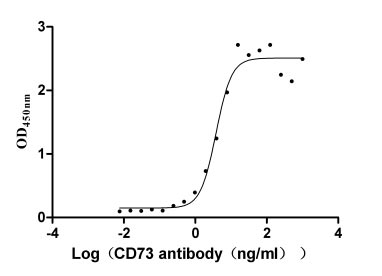
Recombinant Human 5'-nucleotidase (NT5E) (Active)
Express system: Mammalian cell
Species: Homo sapiens (Human)
-
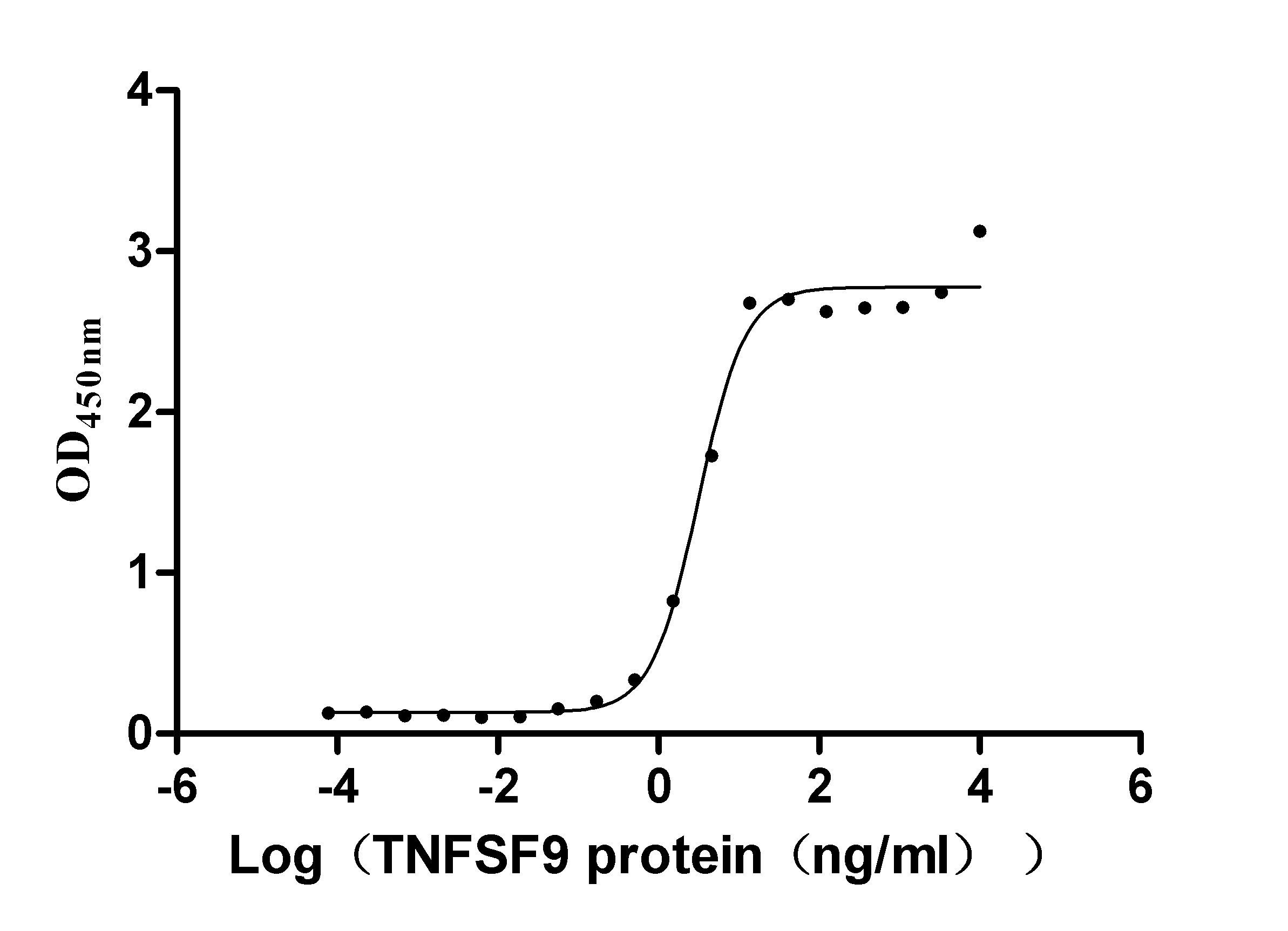
Recombinant Human Tumor necrosis factor ligand superfamily member 9 (TNFSF9), partial (Active)
Express system: Mammalian cell
Species: Homo sapiens (Human)
-
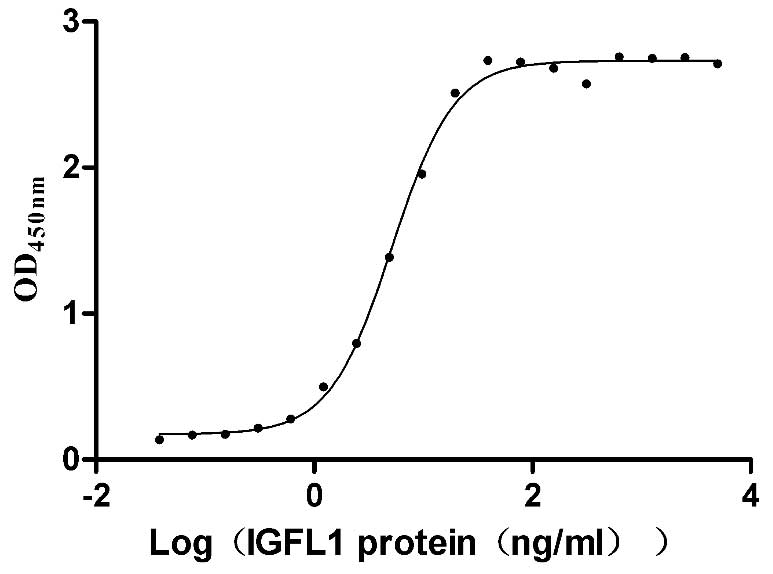
Recombinant Human IGF-like family receptor 1 (IGFLR1), partial (Active)
Express system: Mammalian cell
Species: Homo sapiens (Human)
-
-AC1.jpg)
Recombinant Human Angiopoietin-2 (ANGPT2) (Active)
Express system: Mammalian cell
Species: Homo sapiens (Human)
-
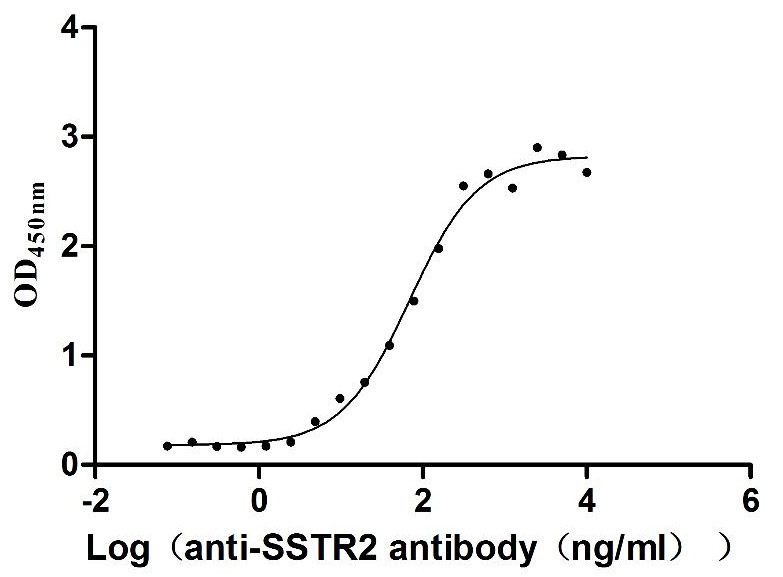
Recombinant Human Somatostatin receptor type 2 (SSTR2)-VLPs (Active)
Express system: Mammalian cell
Species: Homo sapiens (Human)
-
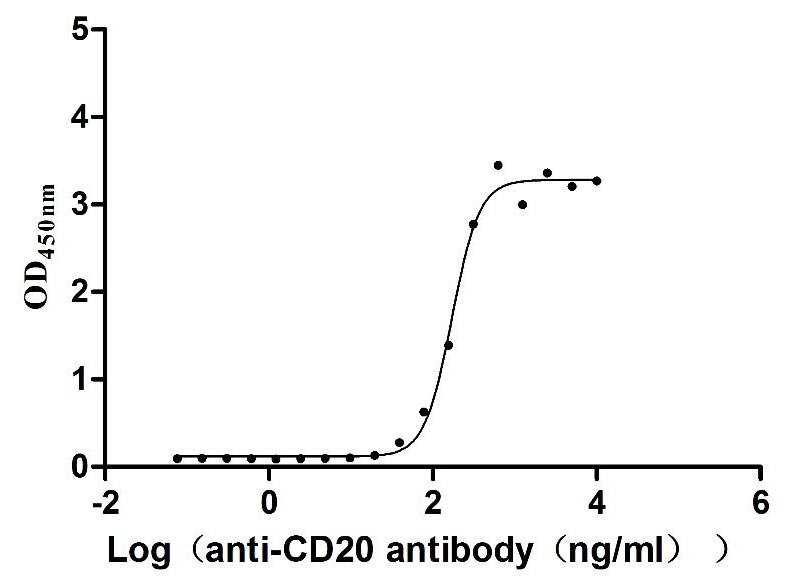
Recombinant Dog B-lymphocyte antigen CD20 (MS4A1)-VLPs (Active)
Express system: Mammalian cell
Species: Canis lupus familiaris (Dog) (Canis familiaris)
-
-AC5.jpg)
Recombinant Human Claudin-6 (CLDN6)-VLPs (Active)
Express system: Mammalian cell
Species: Homo sapiens (Human)
-
-AC1.jpg)
Recombinant Human Dickkopf-related protein 1 (DKK1) (Active)
Express system: Mammalian cell
Species: Homo sapiens (Human)