Recombinant Rat Syntaxin-1A (Stx1a)
-
中文名稱:大鼠Stx1a重組蛋白
-
貨號:CSB-CF022895RA
-
規(guī)格:
-
來源:in vitro E.coli expression system
-
其他:
產品詳情
-
基因名:
-
Uniprot No.:
-
別名:Stx1a; Sap; Syntaxin-1A; Neuron-specific antigen HPC-1; Synaptotagmin-associated 35 kDa protein; P35A
-
種屬:Rattus norvegicus (Rat)
-
蛋白長度:full length protein
-
表達區(qū)域:1-288
-
氨基酸序列MKDRTQELRTAKDSDDDDDVTVTVDRDRFMDEFFEQVEEIRGFIDKIAENVEEVKRKHSAILASPNPDEKTKEELEELMSDIKKTANKVRSKLKSIEQSIEQEEGLNRSSADLRIRKTQHSTLSRKFVEVMSEYNATQSDYRERCKGRIQRQLEITGRTTTSEELEDMLESGNPAIFASGIIMDSSISKQALSEIETRHSEIIKLENSIRELHDMFMDMAMLVESQGEMIDRIEYNVEHAVDYVERAVSDTKKAVKYQSKARRKKIMIIICCVILGIIIASTIGGIFG
Note: The complete sequence may include tag sequence, target protein sequence, linker sequence and extra sequence that is translated with the protein sequence for the purpose(s) of secretion, stability, solubility, etc.
If the exact amino acid sequence of this recombinant protein is critical to your application, please explicitly request the full and complete sequence of this protein before ordering. -
蛋白標簽:N-terminal 10xHis-tagged
-
產品提供形式:Liquid or Lyophilized powder
Note: We will preferentially ship the format that we have in stock, however, if you have any special requirement for the format, please remark your requirement when placing the order, we will prepare according to your demand. -
緩沖液:Lyophilized from Tris/PBS-based buffer, 6% Trehalose, pH 8.0
-
儲存條件:Store at -20°C/-80°C upon receipt, aliquoting is necessary for mutiple use. Avoid repeated freeze-thaw cycles.
-
保質期:The shelf life is related to many factors, storage state, buffer ingredients, storage temperature and the stability of the protein itself.
Generally, the shelf life of liquid form is 6 months at -20°C/-80°C. The shelf life of lyophilized form is 12 months at -20°C/-80°C. -
貨期:Basically, we can dispatch the products out in 1-3 working days after receiving your orders. Delivery time may differ from different purchasing way or location, please kindly consult your local distributors for specific delivery time.Note: All of our proteins are default shipped with normal blue ice packs, if you request to ship with dry ice, please communicate with us in advance and extra fees will be charged.
-
注意事項:Repeated freezing and thawing is not recommended. Store working aliquots at 4°C for up to one week.
-
Datasheet & COA:Please contact us to get it.
產品評價

相關產品
靶點詳情
-
功能:Plays an essential role in hormone and neurotransmitter calcium-dependent exocytosis and endocytosis. Part of the SNARE (Soluble NSF Attachment Receptor) complex composed of SNAP25, STX1A and VAMP2 which mediates the fusion of synaptic vesicles with the presynaptic plasma membrane. STX1A and SNAP25 are localized on the plasma membrane while VAMP2 resides in synaptic vesicles. The pairing of the three SNAREs from the N-terminal SNARE motifs to the C-terminal anchors leads to the formation of the SNARE complex, which brings membranes into close proximity and results in final fusion. Participates in the calcium-dependent regulation of acrosomal exocytosis in sperm. Plays also an important role in the exocytosis of hormones such as insulin or glucagon-like peptide 1 (GLP-1).
-
基因功能參考文獻:
- Our results suggest that, as in the CNS, CADM1 interactions drive exocytic site assembly and promote actin network formation. These results support the broader hypothesis that the effects of cell-cell contact on beta-cell maturation and function are mediated by the same extracellular protein interactions that drive the formation of the presynaptic exocytic machinery. These interactions may be therapeutic targets for re... PMID: 27072493
- These results indicate that SUMOylation regulates the emerging role of Syntaxin1A in vesicle endocytosis, which in turn, modulates neurotransmitter release and synaptic function PMID: 26635000
- Ca(2+)acts as a charge bridge that specifically and reversibly connects multiple syntaxin 1/Phosphatidylinositol 4,5-Bisphosphate complexes into larger mesoscale domains. PMID: 26884341
- This study showed that association of SP1 and acetylated histone H3 to CPR is important for Stx1a transcription and that HDAC1, HDAC2, and HDAC8 decide cell/tissue specificity in a suppressive manner. PMID: 26391271
- The Ca2+-dependent transition in syntaxin 1A (Syx) involves zippering between the membrane-proximal juxtamembrane regions of Syx and VAMP2. PMID: 23641074
- Syntaxin-1a is the direct target of miR-29a in insulin-producing beta-cells in response to glucose. PMID: 23315993
- Syntaxin facilitated vesicle mobilization to the readily releasable pool, most likely via their roles in endocytosis and/or exocytosis. PMID: 23643538
- syntaxin 1 and SNAP-25 cooperate as SNARE proteins to support neuron survival. PMID: 23403573
- VAMP2, SNAP25b and syntaxin 1 characterize most cerebellar glutamatergic synapses and only one type of GABAergic synapse. PMID: 22094010
- Dysregulation of SNARE complex and syt-1 in prefronal cortex of adult-onset hypothyroidism can be restored by T(4) treatment. PMID: 21646859
- Taurine supplementation of low-protein diet rats restored Ach-M3R, Synt1, SNAP-25 protein levels and increased sarcoendoplasmatic reticulum Ca2+-ATPase (SERCA) 3 protein expression in rats on a low-protein diet. PMID: 21543213
- Syntaxin 1 binds to Synaptotagmin I electrostatically through C(2)B domain effector region in a Ca(2+)-independent fashion, providing biochemical evidence that synaptotagmin I binds SNARE complexes before Ca(2+) influx into presynaptic nerve terminals. PMID: 22008253
- syntaxin 1A H3 domain partially blocks Munc18-1 activation of liposome fusion by occupying the Munc18-1 central cavity PMID: 21900493
- Syntaxin1A was rapidly exchanged between synaptic and extrasynaptic regions. Changes in syntaxin1A mobility were associated with interactions related to the formation of the exocytotic complex. PMID: 22131420
- syntaxin-1A clustering in membranes is mediated by electrostatic interactions with the strongly anionic lipid phosphatidylinositol-4,5-bisphosphate (PIP2) PMID: 22020284
- the syntaxin 1A N-terminus is the minimal determinant for functional regulation of CaV2.2 and CaV2.3 channels. PMID: 21763275
- Data show that low syntaxin and SNAP-25 cleavage could reflect poor expression of a particular Botulinum neurotoxin mutant. PMID: 21401123
- Physiological or pathological changes in syntaxin 1A expression may modulate insulin secretion by altering glucose-secretion coupling via changes in ATP-sensitive potassium channel K(ATP) expression. PMID: 21209369
- There was a more than 10-fold excess of SNAP-25 over syntaxin-1. PMID: 21076040
- Ionic dependence of Ca2+ channel modulation by syntaxin 1A PMID: 11891287
- Substrates regulate gamma-aminobutyric acid transporters in a syntaxin 1A-dependent manner PMID: 11960023
- Using botulinum toxin to cleave syntaxin 1A, decreased 5HT transporter function. The effect of the toxin was to decrease maximum transport capacity with little change to the affinity of the transporter for 5HT. PMID: 12175857
- synaptobrevin 2 forms complexes with the plasma membrane-bound SNAREs syntaxin 1A and SNAP25 to initiate the fusion reaction. PMID: 12177041
- Reduction of neurotransmitter release by the exogenous H3 domain peptide of HPC-1/syntaxin 1A in cultured rat hippocampal neurons. PMID: 12183029
- syntaxin 1A may contain a G-protein gamma subunit-like domain and dynamically regulates N-type channel function during various steps of exocytosis PMID: 12221094
- unique expression and localization of plasma membrane syntaxins which may contribute to the trafficking phenotype of retinal pigment epithelial cells PMID: 12414999
- syntaxin 1A is a DAP kinase substrate and uses a novel signal transduction pathway by which syntaxin function is regulated in response to intracellular [Ca2+] and synaptic activity PMID: 12730201
- The syntaxin 1A C-terminal membrane-anchoring region, which comprises 23 amino acids, does not traverse the lipid-bilayer and is essential for anchoring of syntaxin 1A to the plasma membrane. PMID: 12761168
- co-expression of BKCa channels with syntaxin 1A was observed to enhance channel gating and kinetics at low concentrations of free cytosolic calcium, but not at higher concentrations PMID: 12949219
- Atomic force microscopy was used to study recombinant syntaxin 1A in detergent extracts & in a lipid environment. Full-length syntaxin tended to aggregate. Syntaxin lacking its transmembrane region was predominantly monomeric. PMID: 14502428
- Syn-1A acts as an endogenous regulator of KATP channels PMID: 14645230
- syntaphilin was identified as a molecular clamp that controls free syntaxin-1 and dynamin-1 availability and thereby regulates synaptic vesicle exocytosis and endocytosis. PKA phosphorylation of syntaphilin decreases its binding to syntaxin-1A in vitro. PMID: 14985338
- Since syntaxin is known as one of the synaptic molecules involved in the exocytosis of synaptic vesicles, the up-regulation of syntaxin mRNA under hypergravity may reflect synaptic plasticity occurring in the peripheral vestibular system. PMID: 15076716
- syntaxin 1A increased voltage-dependent inactivation in Ca2+ channels containing mutant beta2a subunits that cannot be palmitoylated PMID: 15319413
- Overexpression of syntaxin-1A inhibits exocytosis, in a manner that can be rescued by either elevating or reducing external calcium, or increasing action potential firing frequency. PMID: 15721169
- within the H3 domain of syntaxin 1A is a unique cassette that participates in the binding of the H(+)-ATPase to the apical membrane and confers specificity of syntaxin 1A in the process of H(+)-ATPase exocytosis PMID: 15872013
- interaction between myosin-Va and syntaxin-1A is involved in exocytosis PMID: 16030255
- Data are consistent with the concept that both syntaxin 1 and SNAP-25 are required for rapid exocytosis in pancreatic beta-cells. PMID: 16720719
- results show SNARE nucleation restricted to N-terminal portion; zippering proceeds in an N- to C-terminal direction; synaptobrevin binds rapidly to syntaxin/SNAP-25 acceptor; stabilizing syntaxin/SNAP-25 acceptor by a peptide allowed fast liposome fusion PMID: 16888141
- Munc18-1 allows for the formation of a complex between syntaxin and SNAP-25 that serves as an acceptor for vesicle-bound synaptobrevin [Munc18-1] PMID: 17002520
- These results support the proposition that taste cell synapses use classical SNARE machinery such as syntaxin-1 for neurotransmitter release in rat circumvallate taste buds. PMID: 17447252
- it was shown that plasma membrane clustering of syntaxin 1A can be explained by self-organization based on simple physical principles PMID: 17717182
- These data suggest that Syntaxin1A-lipid interactions are a critical determinant of the energetics of Soluble N-ethylmaleimide-Sensitive-Factor Attachment Protein Receptor-catalyzed fusion events. PMID: 18003982
- the plasma membrane SNARE syntaxin-1 poorly colocalized with cholera toxin-B (<5%), whereas it highly colocalized (75%) with rPRL in inside-out plasma membrane lawns in lactotrophs PMID: 18556353
- These results indicate that PI 4,5-P(2) regulates fusion both as a fusion restraint that syntaxin-1 alleviates and as an essential cofactor that recruits protein priming factors to facilitate SNARE-dependent fusion. PMID: 18644890
- Data suggest that during severe sepsis, both the upregulation of syntaxin1A and the downregulation of norepinephrine transporter contribute to increased concentrations of norepinephrine during the early and late stages of sepsis. PMID: 19039652
- Here, we have reconstituted syntaxin-1A into lipid model membranes, and we show that syntaxin cluster formation depends on cholesterol in a lipid system. PMID: 19364135
- glucose-mediated inhibition of cholesterol biosynthesis perturbs lipid raft stability, resulting in a loss of syntaxin 1A from granule docking sites and inhibition of insulin secretion. PMID: 19716806
- Syntaxin clusters serve as a mechanism for maintaining reactive SNARE proteins by reducing the overall level of cis-SNARE complexes at low energy costs. PMID: 19793988
- Under appropriate conditions a docked state, mediated by trans-SNARE interactions, can be isolated that constitutes an intermediate in the fusion pathway. PMID: 19843696
顯示更多
收起更多
-
亞細胞定位:Cytoplasmic vesicle, secretory vesicle, synaptic vesicle membrane; Single-pass type IV membrane protein. Cell membrane. Cell junction, synapse, synaptosome.
-
蛋白家族:Syntaxin family
-
組織特異性:Expressed predominantly in cerebral cortex, hippocampus, cerebellum, adrenal medulla and retina with weak expression detected in non-neuronal tissues.
-
數(shù)據庫鏈接:
Most popular with customers
-
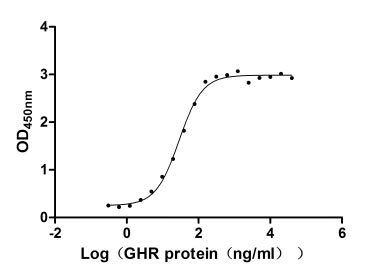
Recombinant Human Growth hormone receptor (GHR), partial (Active)
Express system: Mammalian cell
Species: Homo sapiens (Human)
-
-AC1.jpg)
Recombinant Human Microtubule-associated protein tau (MAPT) (Active)
Express system: Mammalian cell
Species: Homo sapiens (Human)
-
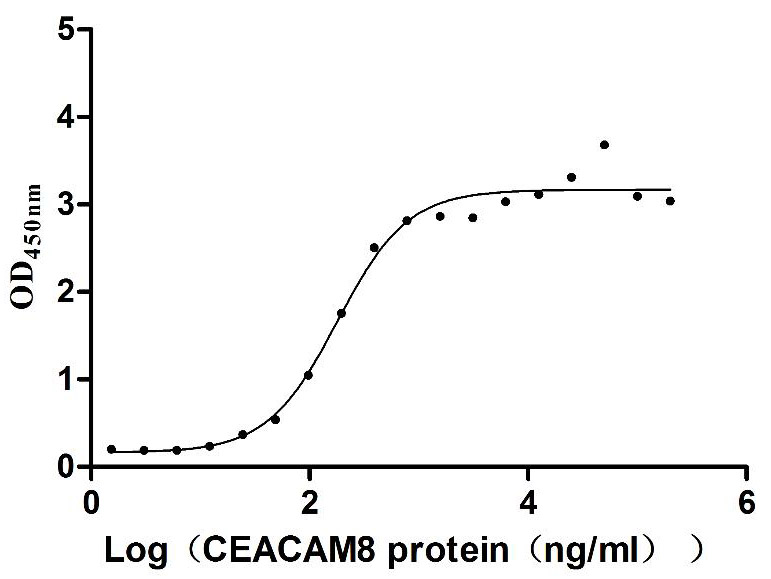
Recombinant Human Carcinoembryonic antigen-related cell adhesion molecule 6 (CEACAM6) (Active)
Express system: Mammalian cell
Species: Homo sapiens (Human)
-
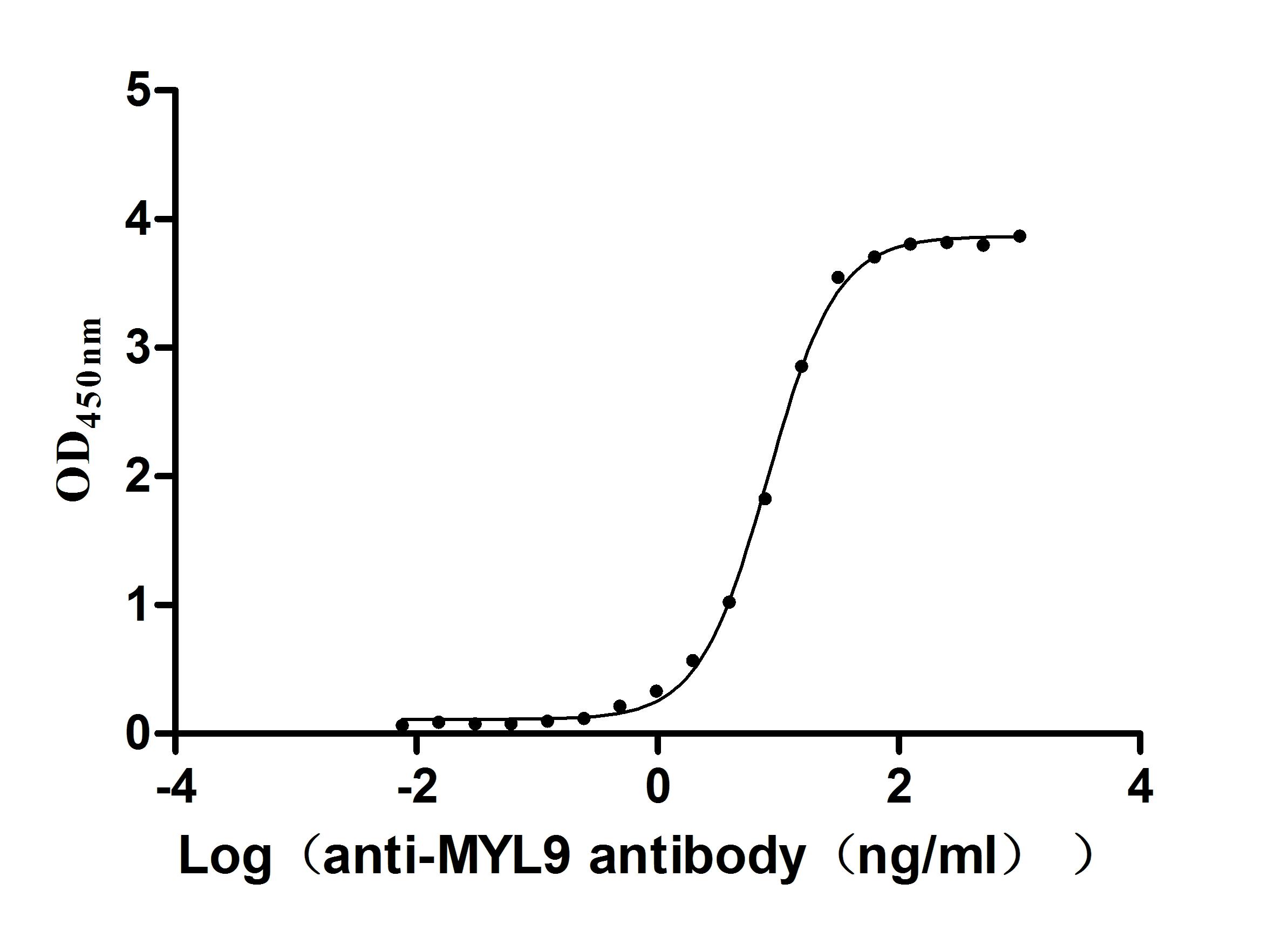
Recombinant Human Myosin regulatory light chain 12B (MYL12B) (Active)
Express system: E.coli
Species: Homo sapiens (Human)
-
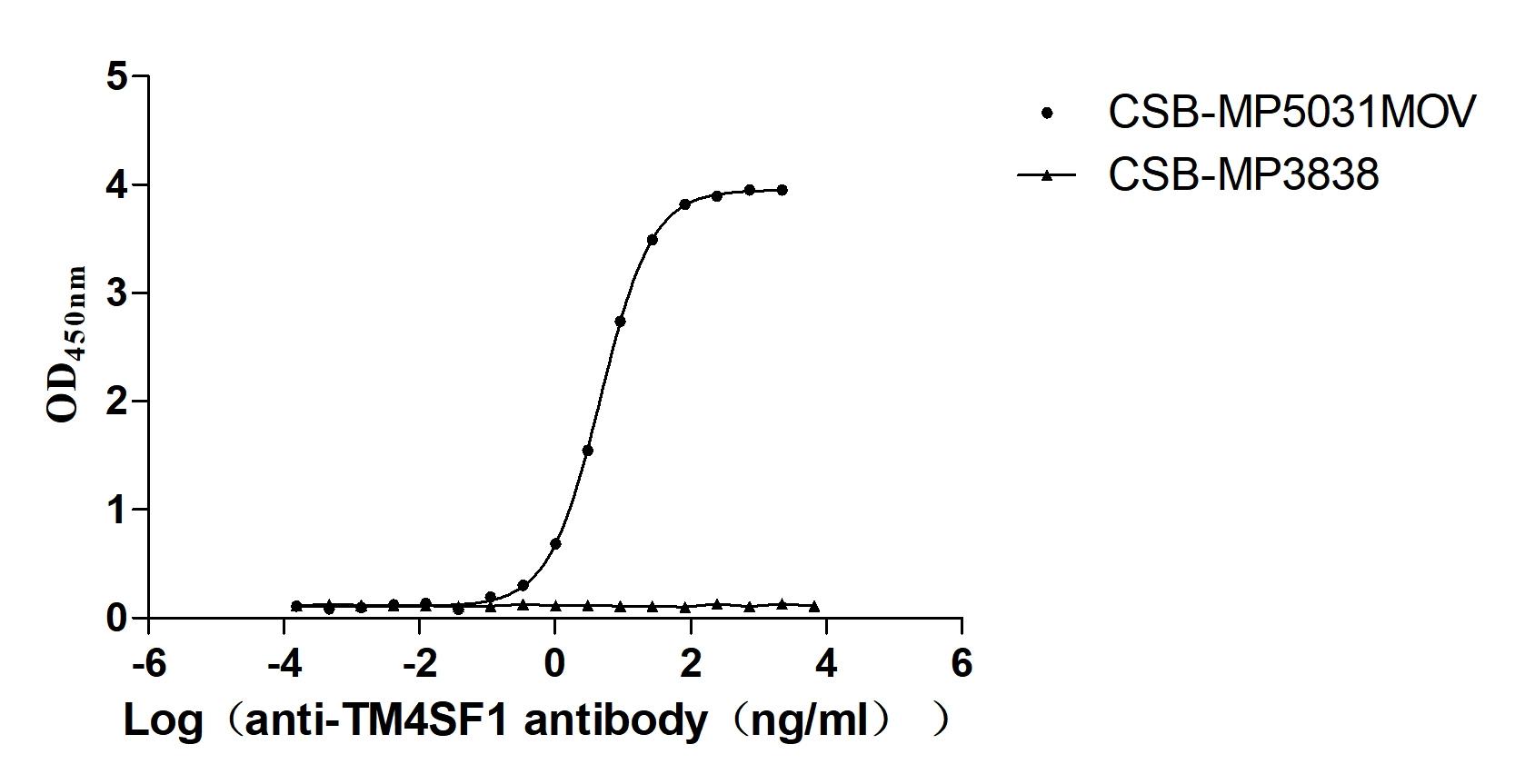
Recombinant Macaca fascicularis Transmembrane 4 L6 family member 1 (TM4SF1)-VLPs (Active)
Express system: Mammalian cell
Species: Macaca fascicularis (Crab-eating macaque) (Cynomolgus monkey)