Recombinant Mouse Palladin (Palld), partial
-
中文名稱:小鼠Palld重組蛋白
-
貨號(hào):CSB-YP884164MO
-
規(guī)格:
-
來(lái)源:Yeast
-
其他:
-
中文名稱:小鼠Palld重組蛋白
-
貨號(hào):CSB-EP884164MO
-
規(guī)格:
-
來(lái)源:E.coli
-
其他:
-
中文名稱:小鼠Palld重組蛋白
-
貨號(hào):CSB-EP884164MO-B
-
規(guī)格:
-
來(lái)源:E.coli
-
共軛:Avi-tag Biotinylated
E. coli biotin ligase (BirA) is highly specific in covalently attaching biotin to the 15 amino acid AviTag peptide. This recombinant protein was biotinylated in vivo by AviTag-BirA technology, which method is BriA catalyzes amide linkage between the biotin and the specific lysine of the AviTag.
-
其他:
-
中文名稱:小鼠Palld重組蛋白
-
貨號(hào):CSB-BP884164MO
-
規(guī)格:
-
來(lái)源:Baculovirus
-
其他:
-
中文名稱:小鼠Palld重組蛋白
-
貨號(hào):CSB-MP884164MO
-
規(guī)格:
-
來(lái)源:Mammalian cell
-
其他:
產(chǎn)品詳情
-
純度:>85% (SDS-PAGE)
-
基因名:Palld
-
Uniprot No.:
-
別名:Palld; Kiaa0992; Palladin
-
種屬:Mus musculus (Mouse)
-
蛋白長(zhǎng)度:Partial
-
蛋白標(biāo)簽:Tag?type?will?be?determined?during?the?manufacturing?process.
The tag type will be determined during production process. If you have specified tag type, please tell us and we will develop the specified tag preferentially. -
產(chǎn)品提供形式:Lyophilized powder
Note: We will preferentially ship the format that we have in stock, however, if you have any special requirement for the format, please remark your requirement when placing the order, we will prepare according to your demand. -
復(fù)溶:We recommend that this vial be briefly centrifuged prior to opening to bring the contents to the bottom. Please reconstitute protein in deionized sterile water to a concentration of 0.1-1.0 mg/mL.We recommend to add 5-50% of glycerol (final concentration) and aliquot for long-term storage at -20℃/-80℃. Our default final concentration of glycerol is 50%. Customers could use it as reference.
-
儲(chǔ)存條件:Store at -20°C/-80°C upon receipt, aliquoting is necessary for mutiple use. Avoid repeated freeze-thaw cycles.
-
保質(zhì)期:The shelf life is related to many factors, storage state, buffer ingredients, storage temperature and the stability of the protein itself.
Generally, the shelf life of liquid form is 6 months at -20°C/-80°C. The shelf life of lyophilized form is 12 months at -20°C/-80°C. -
貨期:Delivery time may differ from different purchasing way or location, please kindly consult your local distributors for specific delivery time.Note: All of our proteins are default shipped with normal blue ice packs, if you request to ship with dry ice, please communicate with us in advance and extra fees will be charged.
-
注意事項(xiàng):Repeated freezing and thawing is not recommended. Store working aliquots at 4°C for up to one week.
-
Datasheet :Please contact us to get it.
產(chǎn)品評(píng)價(jià)

靶點(diǎn)詳情
-
功能:Cytoskeletal protein required for organization of normal actin cytoskeleton. Roles in establishing cell morphology, motility, cell adhesion and cell-extracellular matrix interactions in a variety of cell types. May function as a scaffolding molecule with the potential to influence both actin polymerization and the assembly of existing actin filaments into higher-order arrays. Binds to proteins that bind to either monomeric or filamentous actin. Localizes at sites where active actin remodeling takes place, such as lamellipodia and membrane ruffles. Different isoforms may have functional differences. Involved in the control of morphological and cytoskeletal changes associated with dendritic cell maturation. Involved in targeting ACTN to specific May be required for the initiation of neural tube closure.
-
基因功能參考文獻(xiàn):
- Study shows palladin is expressed with proper spatio-temporal pattern in the neural folds. It plays a crucial role in regulating mouse cranial neural tube closure by modulating cytoskeleton, proliferation, differentiation, apoptosis, and adhesion of neural epithelium PMID: 28340616
- these results show a new function for PALLD as a crucial regulator of the early phase of phagocytosis by elaborating dynamic actin polymerization and depolymerization PMID: 28739877
- Interactions with phosphatidylinositol 4,5-bisphosphate decrease the actin polymerizing activity of Ig domain 3 of palladin (Palld-Ig3). PMID: 27487483
- The aggregation of palladin(+/-) platelets was increased in response to low levels of thrombin, U46619, and collagen. This study also reports enhanced spreading of palladin(+/-) platelets on immobilized fibrinogen (Fg) and increased rate of clot retraction in platelet-rich plasma (PRP) containing palladin(+/-) platelets. PMID: 27865965
- The inhibition of palladin in myoblasts stimulates them to exit the cell cycle and express myogenic markers at the early phases of myogenesis, but retards the formation of multinucleated myotubes via the enhanced activation of myostatin. PMID: 25875253
- Suggesting that FSH signaling during Sertoli cell maturation regulates subcellular localization of palladin. PMID: 24989903
- Palladin is required for migration behavior and differentiation potential of cultured myoblast cells. PMID: 25194811
- High levels of palladin expression in cancer associated fibroblasts enhance their ability to remodel the extracellular matrix by regulating the activity of Cdc42. PMID: 23524582
- 140 kDa isoform of PALLD predominates in Sertoli cells, and that it is apparently cleaved, with the C-terminus localizing to the nucleus while the N-terminus remains cytoplasmic. PMID: 23559268
- Palladin mutations that disrupt actin binding show altered cellular distributions and morphology of actin in cells, revealing a functional requirement for the interaction between palladin and actin in vivo. PMID: 23806659
- upregulation of 85-90 kDa palladin isoform may play a role in the establishment of the tumor-associated fibroblasts phenotype, and thus in the formation of a desmoplastic tumor microenvironment PMID: 20436683
- Actin associated protein palladin is important for the early smooth muscle cell differentiation. PMID: 20877641
- palladin is dispensable for normal neurite outgrowth in mice PMID: 19730728
- The actin-associated protein palladin may play an important role in recruiting VASP to sites of actin filament growth, anchorage, and crosslinking. PMID: 14983521
- We propose that palladin is required for the initiation of neural tube closure and provides an important new candidate that may be implicated in the etiology of human NTDs. PMID: 15950489
- Here, we demonstrate that palladin is a binding partner for profilin, interacting with profilin via a poly proline-containing sequence in the amino-terminal half of palladin. PMID: 16367745
- palladin is crucial for definitive erythropoiesis and erythroblastic island formation PMID: 17431131
- expression analysis of the murine palladin isoforms PMID: 18924229
- Palladin is essential for expression of the full complement of contractile proteins necessary for optimal force development of smooth muscle cells derived from embryoid bodies PMID: 19015263
- results indicate that alpha-actinin, CLP36 and palladin form a protein complex and contribute to regulation of the actin cytoskeleton PMID: 19366376
顯示更多
收起更多
-
亞細(xì)胞定位:Cytoplasm, cytoskeleton. Cell junction, focal adhesion. Cytoplasm, myofibril, sarcomere, Z line. Cell projection, ruffle. Cell projection, podosome. Cell projection, lamellipodium. Cell projection, axon. Cell projection, growth cone.
-
蛋白家族:Myotilin/palladin family
-
組織特異性:Detected in both muscle and non-muscle tissues and cells (at protein level). Isoform 3 is widely expressed, isoform 4 is particularly abundant in tissues rich in smooth muscle and in the cardiac muscle and isoform 1 is detected in heart.
-
數(shù)據(jù)庫(kù)鏈接:
Most popular with customers
-
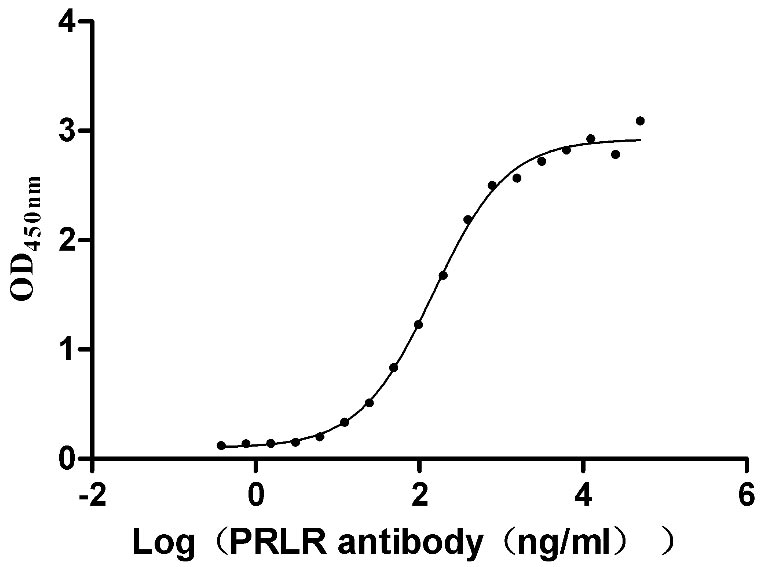
Recombinant Human Prolactin receptor (PRLR), partial (Active)
Express system: Mammalian cell
Species: Homo sapiens (Human)
-
-AC1.jpg)
Recombinant Human Claudin-18.2 (CLDN18.2)-VLPs (Active)
Express system: Mammalian cell
Species: Homo sapiens (Human)
-
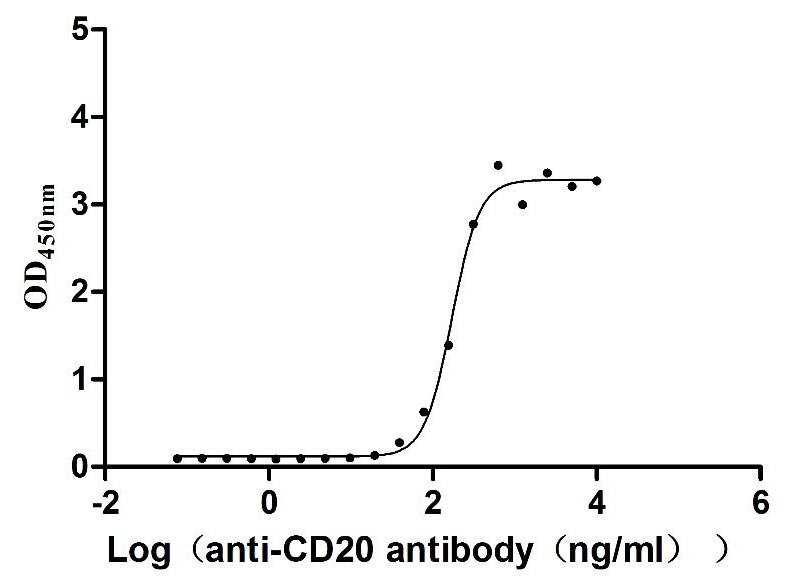
Recombinant Dog B-lymphocyte antigen CD20 (MS4A1)-VLPs (Active)
Express system: Mammalian cell
Species: Canis lupus familiaris (Dog) (Canis familiaris)
-
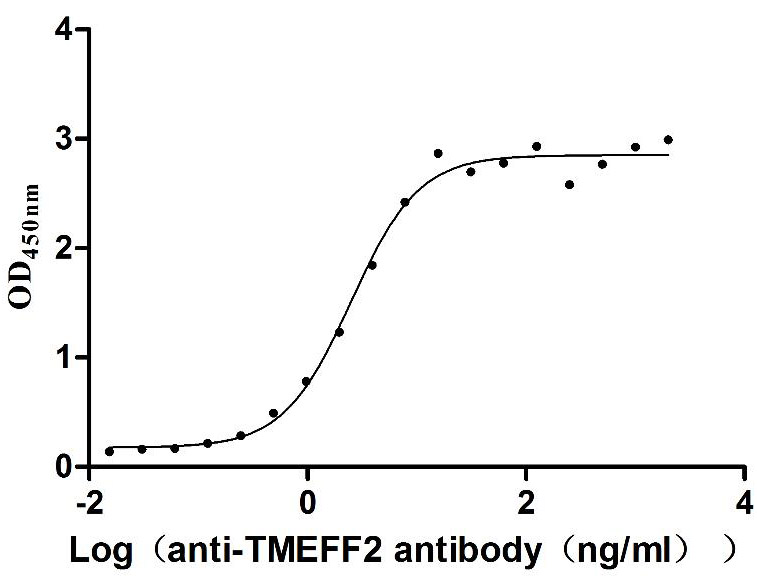
Recombinant Human Tomoregulin-2 (TMEFF2), partial (Active)
Express system: Mammalian cell
Species: Homo sapiens (Human)
-
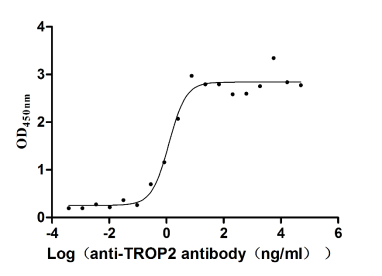
Recombinant Human Tumor-associated calcium signal transducer 2 (TACSTD2), partial (Active)
Express system: Mammalian cell
Species: Homo sapiens (Human)