Recombinant Glycoprotein G (G), partial
-
中文名稱:Recombinant Glycoprotein G(G) ,partial
-
貨號:CSB-YP862323NDT
-
規(guī)格:
-
來源:Yeast
-
其他:
-
中文名稱:Recombinant Glycoprotein G(G) ,partial
-
貨號:CSB-EP862323NDT
-
規(guī)格:
-
來源:E.coli
-
其他:
-
中文名稱:Recombinant Glycoprotein G(G) ,partial
-
貨號:CSB-EP862323NDT-B
-
規(guī)格:
-
來源:E.coli
-
共軛:Avi-tag Biotinylated
E. coli biotin ligase (BirA) is highly specific in covalently attaching biotin to the 15 amino acid AviTag peptide. This recombinant protein was biotinylated in vivo by AviTag-BirA technology, which method is BriA catalyzes amide linkage between the biotin and the specific lysine of the AviTag.
-
其他:
-
中文名稱:Recombinant Glycoprotein G(G) ,partial
-
貨號:CSB-BP862323NDT
-
規(guī)格:
-
來源:Baculovirus
-
其他:
產(chǎn)品詳情
-
純度:>85% (SDS-PAGE)
-
基因名:G
-
Uniprot No.:
-
別名:G; Glycoprotein G
-
種屬:Nipah virus
-
蛋白長度:Partial
-
蛋白標簽:Tag?type?will?be?determined?during?the?manufacturing?process.
The tag type will be determined during production process. If you have specified tag type, please tell us and we will develop the specified tag preferentially. -
產(chǎn)品提供形式:Lyophilized powder
Note: We will preferentially ship the format that we have in stock, however, if you have any special requirement for the format, please remark your requirement when placing the order, we will prepare according to your demand. -
復(fù)溶:We recommend that this vial be briefly centrifuged prior to opening to bring the contents to the bottom. Please reconstitute protein in deionized sterile water to a concentration of 0.1-1.0 mg/mL.We recommend to add 5-50% of glycerol (final concentration) and aliquot for long-term storage at -20℃/-80℃. Our default final concentration of glycerol is 50%. Customers could use it as reference.
-
儲存條件:Store at -20°C/-80°C upon receipt, aliquoting is necessary for mutiple use. Avoid repeated freeze-thaw cycles.
-
保質(zhì)期:The shelf life is related to many factors, storage state, buffer ingredients, storage temperature and the stability of the protein itself.
Generally, the shelf life of liquid form is 6 months at -20°C/-80°C. The shelf life of lyophilized form is 12 months at -20°C/-80°C. -
貨期:Delivery time may differ from different purchasing way or location, please kindly consult your local distributors for specific delivery time.Note: All of our proteins are default shipped with normal blue ice packs, if you request to ship with dry ice, please communicate with us in advance and extra fees will be charged.
-
注意事項:Repeated freezing and thawing is not recommended. Store working aliquots at 4°C for up to one week.
-
Datasheet :Please contact us to get it.
產(chǎn)品評價

相關(guān)產(chǎn)品
靶點詳情
-
功能:Interacts with host ephrinB2/EFNB2 or ephrin B3/EFNB3 to provide virion attachment to target cell. This attachment induces virion internalization predominantly through clathrin-mediated endocytosis.
-
基因功能參考文獻:
- G and the fusion protein F are both crucial glycoproteins located on the surface of the virus envelope. [review] PMID: 29963835
- the binding of the viral attachment protein G to its host receptor ephrinB2 was studied and showed monomeric and dimeric receptors activate distinct conformational changes in G. PMID: 28974687
- Data suggest that fusion of Nipah viruses with host cells is facilitated by two of viral membrane proteins, the G protein and the F protein; G head domain binds to human ephrins B2 and B3 altering conformational density of entire G head domain. PMID: 24615845
- Authors identified a G stalk C-terminal region (amino acids 159 to 163) that is important for multiple G functions, including G tetramerization, conformational integrity, G-F interactions, receptor-induced conformational changes in G, and F triggering. PMID: 25428863
- Cysteine cluster in the G protein is involved in stabilizing a unique microdomain critical for triggering fusion. PMID: 22496210
- Results indicated that the G-H loop of ephrin-B2 was indeed critical for the interaction between ephrin-B2 and Nipah virus-G. PMID: 21632558
- the G protein appeared to be constitutively internalized with the bulk flow during membrane turnover PMID: 15731282
- sNiV-G binds to ephrinB3 with a 30-fold higher affinity than that of sHeV-G. PMID: 17652392
- report the crystal structures of the NiV-G both in its receptor-unbound state and in complex with ephrin-B3, providing, to our knowledge, the first view of a paramyxovirus attachment complex in which a cellular protein is used as the virus receptor PMID: 18632560
顯示更多
收起更多
-
亞細胞定位:Virion membrane; Single-pass type II membrane protein. Host cell membrane; Single-pass type II membrane protein.
-
蛋白家族:Paramyxoviruses hemagglutinin-neuraminidase family
-
數(shù)據(jù)庫鏈接:
KEGG: vg:920955
Most popular with customers
-
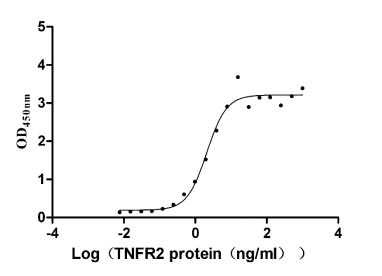
Recombinant Human Lymphotoxin-alpha (LTA) (Active)
Express system: Mammalian cell
Species: Homo sapiens (Human)
-
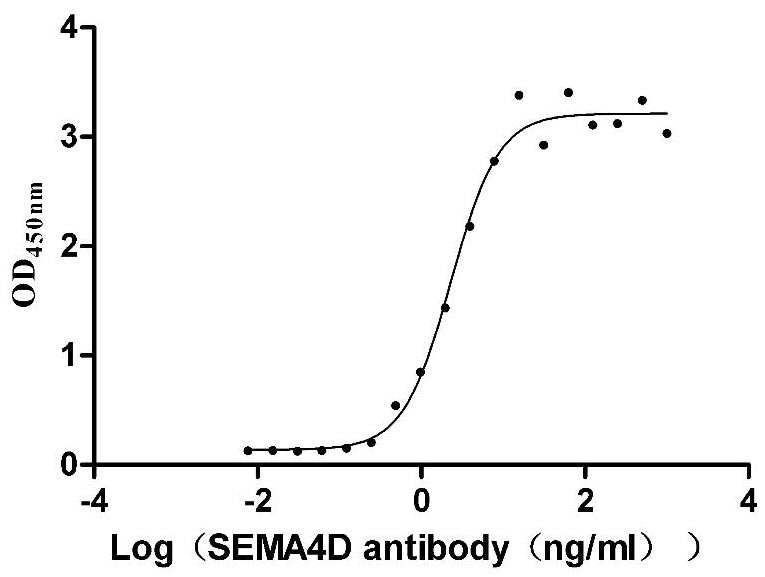
Recombinant Macaca mulatta Semaphorin-4D isoform 1 (SEMA4D), partial (Active)
Express system: Mammalian cell
Species: Macaca mulatta (Rhesus macaque)
-
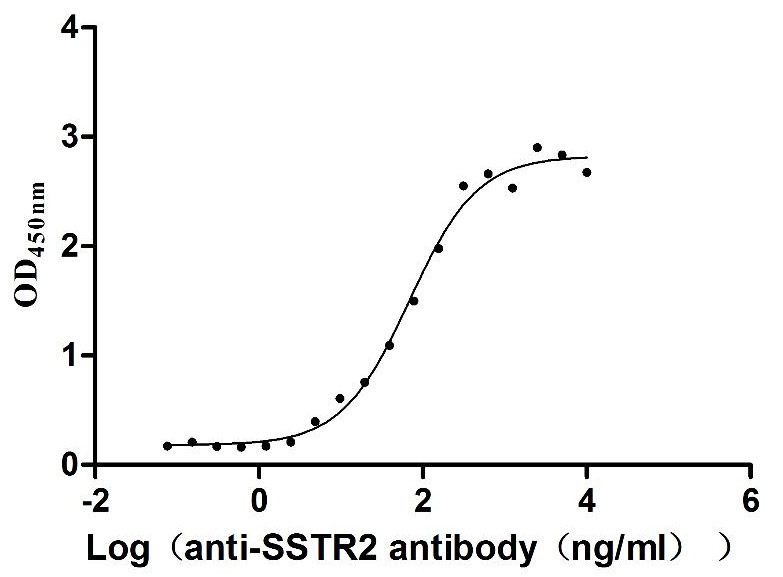
Recombinant Human Somatostatin receptor type 2 (SSTR2)-VLPs (Active)
Express system: Mammalian cell
Species: Homo sapiens (Human)
-
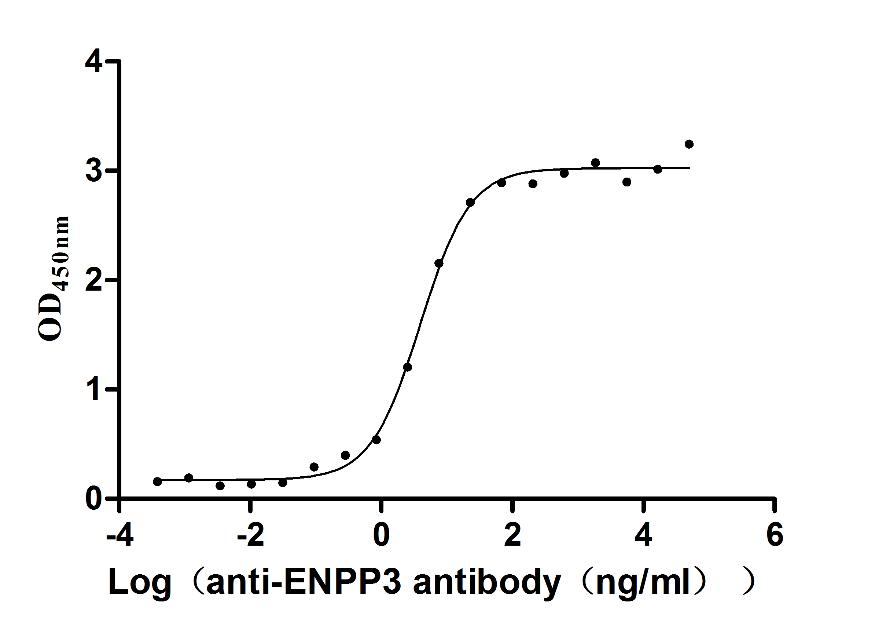
Express system: Mammalian cell
Species: Macaca fascicularis (Crab-eating macaque) (Cynomolgus monkey)
-
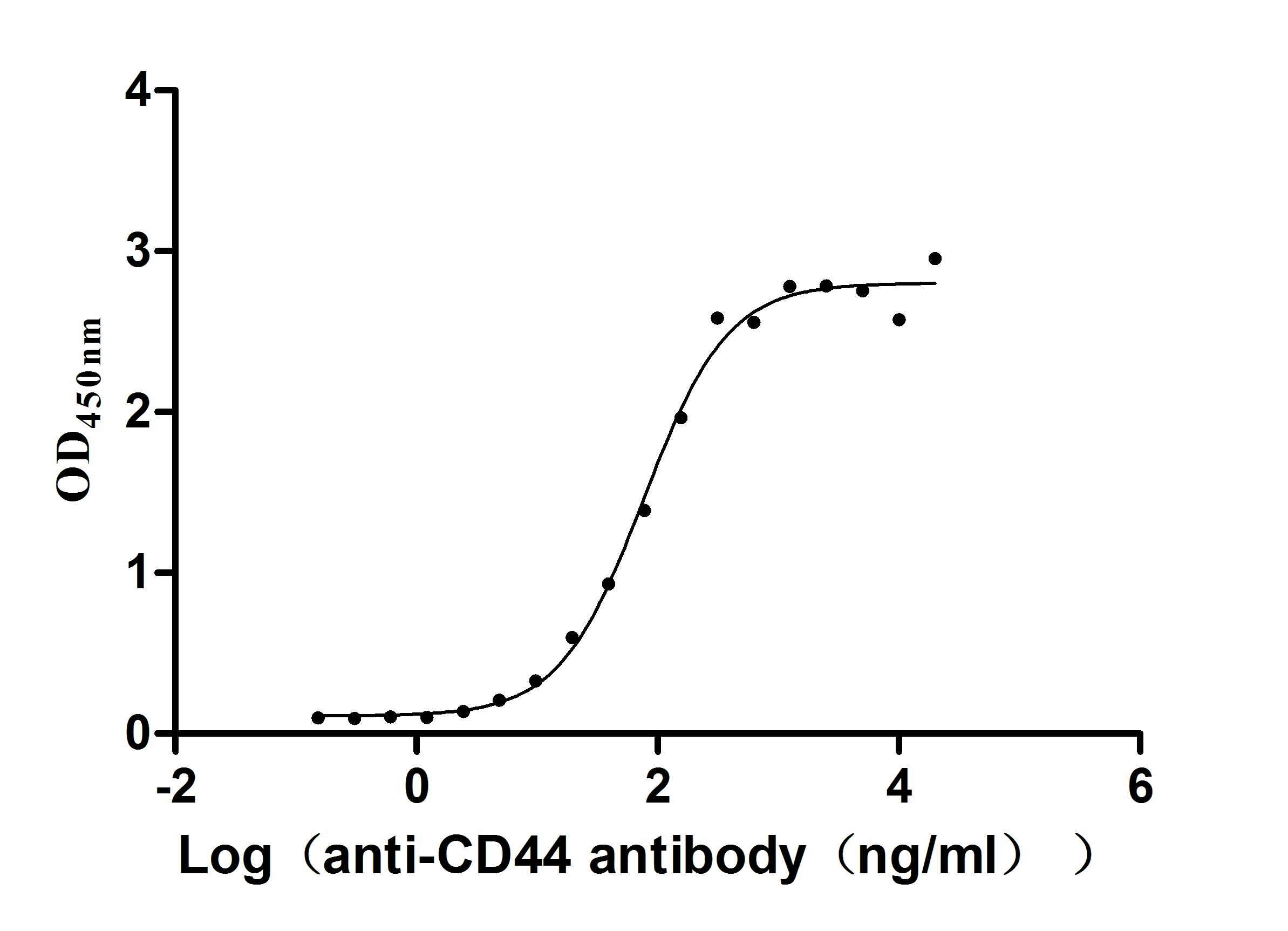
Recombinant Macaca fascicularis CD44 antigen (CD44), partial (Active)
Express system: Mammalian cell
Species: Macaca fascicularis (Crab-eating macaque) (Cynomolgus monkey)
-
-AC1.jpg)
Recombinant Human Microtubule-associated protein tau (MAPT) (Active)
Express system: Mammalian cell
Species: Homo sapiens (Human)
-
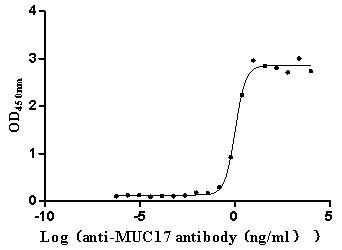
Recombinant Human Mucin-17 (MUC17), partial (Active)
Express system: Mammalian cell
Species: Homo sapiens (Human)
-
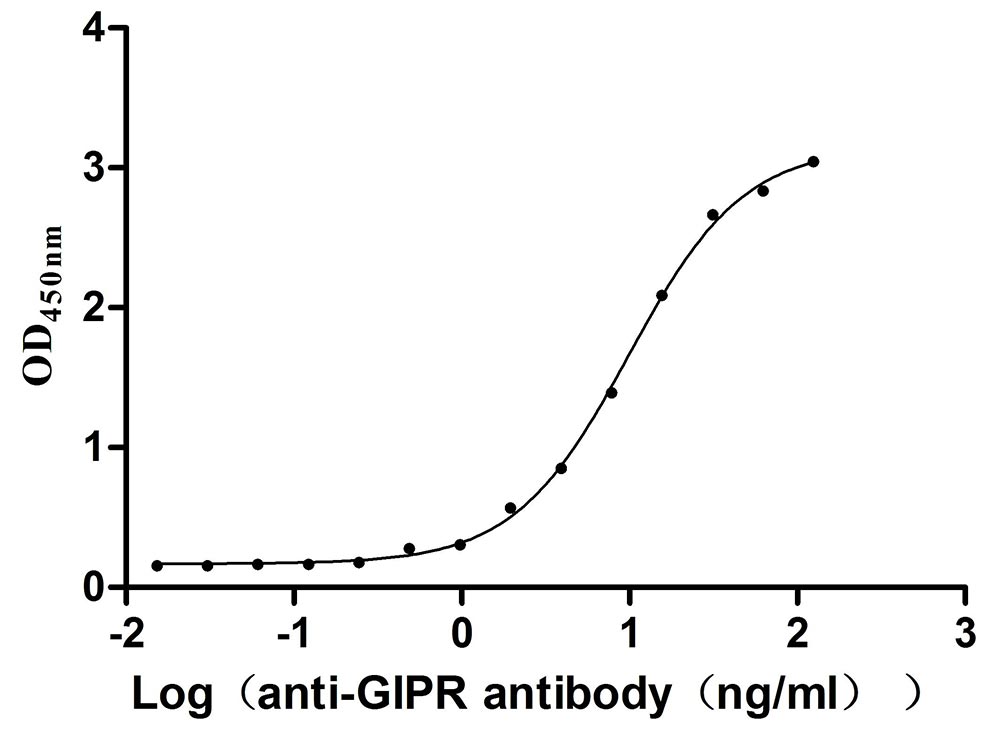
Recombinant Mouse Gastric inhibitory polypeptide receptor (Gipr), partial (Active)
Express system: Mammalian cell
Species: Mus musculus (Mouse)