Recombinant Escherichia coli DNA mismatch repair protein mutL (mutL)
-
中文名稱:大腸桿菌mutL重組蛋白
-
貨號(hào):CSB-YP326396ENV
-
規(guī)格:
-
來源:Yeast
-
其他:
-
中文名稱:大腸桿菌mutL重組蛋白
-
貨號(hào):CSB-EP326396ENV
-
規(guī)格:
-
來源:E.coli
-
其他:
-
中文名稱:大腸桿菌mutL重組蛋白
-
貨號(hào):CSB-EP326396ENV-B
-
規(guī)格:
-
來源:E.coli
-
共軛:Avi-tag Biotinylated
E. coli biotin ligase (BirA) is highly specific in covalently attaching biotin to the 15 amino acid AviTag peptide. This recombinant protein was biotinylated in vivo by AviTag-BirA technology, which method is BriA catalyzes amide linkage between the biotin and the specific lysine of the AviTag.
-
其他:
-
中文名稱:大腸桿菌mutL重組蛋白
-
貨號(hào):CSB-BP326396ENV
-
規(guī)格:
-
來源:Baculovirus
-
其他:
-
中文名稱:大腸桿菌mutL重組蛋白
-
貨號(hào):CSB-MP326396ENV
-
規(guī)格:
-
來源:Mammalian cell
-
其他:
產(chǎn)品詳情
-
純度:>85% (SDS-PAGE)
-
基因名:mutL
-
Uniprot No.:
-
別名:mutL; b4170; JW4128; DNA mismatch repair protein MutL
-
種屬:Escherichia coli (strain K12)
-
蛋白長(zhǎng)度:full length protein
-
表達(dá)區(qū)域:1-615
-
氨基酸序列MPIQVLPPQL ANQIAAGEVV ERPASVVKEL VENSLDAGAT RIDIDIERGG AKLIRIRDNG CGIKKDELAL ALARHATSKI ASLDDLEAII SLGFRGEALA SISSVSRLTL TSRTAEQQEA WQAYAEGRDM NVTVKPAAHP VGTTLEVLDL FYNTPARRKF LRTEKTEFNH IDEIIRRIAL ARFDVTINLS HNGKIVRQYR AVPEGGQKER RLGAICGTAF LEQALAIEWQ HGDLTLRGWV ADPNHTTPAL AEIQYCYVNG RMMRDRLINH AIRQACEDKL GADQQPAFVL YLEIDPHQVD VNVHPAKHEV RFHQSRLVHD FIYQGVLSVL QQQLETPLPL DDEPQPAPRS IPENRVAAGR NHFAEPAARE PVAPRYTPAP ASGSRPAAPW PNAQPGYQKQ QGEVYRQLLQ TPAPMQKLKA PEPQEPALAA NSQSFGRVLT IVHSDCALLE RDGNISLLSL PVAERWLRQA QLTPGEAPVC AQPLLIPLRL KVSAEEKSAL EKAQSALAEL GIDFQSDAQH VTIRAVPLPL RQQNLQILIP ELIGYLAKQS VFEPGNIAQW IARNLMSEHA QWSMAQAITL LADVERLCPQ LVKTPPGGLL QSVDLHPAIK ALKDE
-
蛋白標(biāo)簽:Tag?type?will?be?determined?during?the?manufacturing?process.
The tag type will be determined during production process. If you have specified tag type, please tell us and we will develop the specified tag preferentially. -
產(chǎn)品提供形式:Lyophilized powder
Note: We will preferentially ship the format that we have in stock, however, if you have any special requirement for the format, please remark your requirement when placing the order, we will prepare according to your demand. -
復(fù)溶:We recommend that this vial be briefly centrifuged prior to opening to bring the contents to the bottom. Please reconstitute protein in deionized sterile water to a concentration of 0.1-1.0 mg/mL.We recommend to add 5-50% of glycerol (final concentration) and aliquot for long-term storage at -20℃/-80℃. Our default final concentration of glycerol is 50%. Customers could use it as reference.
-
儲(chǔ)存條件:Store at -20°C/-80°C upon receipt, aliquoting is necessary for mutiple use. Avoid repeated freeze-thaw cycles.
-
保質(zhì)期:The shelf life is related to many factors, storage state, buffer ingredients, storage temperature and the stability of the protein itself.
Generally, the shelf life of liquid form is 6 months at -20°C/-80°C. The shelf life of lyophilized form is 12 months at -20°C/-80°C. -
貨期:Delivery time may differ from different purchasing way or location, please kindly consult your local distributors for specific delivery time.Note: All of our proteins are default shipped with normal blue ice packs, if you request to ship with dry ice, please communicate with us in advance and extra fees will be charged.
-
注意事項(xiàng):Repeated freezing and thawing is not recommended. Store working aliquots at 4°C for up to one week.
-
Datasheet :Please contact us to get it.
產(chǎn)品評(píng)價(jià)

相關(guān)產(chǎn)品
靶點(diǎn)詳情
-
功能:This protein is involved in the repair of mismatches in DNA. It is required for dam-dependent methyl-directed DNA mismatch repair. May act as a 'molecular matchmaker', a protein that promotes the formation of a stable complex between two or more DNA-binding proteins in an ATP-dependent manner without itself being part of the final effector complex. The ATPase activity of MutL is stimulated by DNA.
-
基因功能參考文獻(xiàn):
- In this review, we describe biochemical, biophysical and structural analyses that have clarified how MutL aids at discriminating the newly synthesized strand from its template and marking it for removal. [review] PMID: 25701376
- study found the deletion or insertion of a single LA repeat did not compromise the structural integrity of the protein, nor did it affect MutS- or DNA-binding activity;it severely compromised ATP binding and engagement of the N-terminal domains; both essential activities for proper DNA mismatch repair PMID: 23916559
- MutL accumulates from the mismatch site toward strand discrimination site along the DNA. PMID: 22241777
- Evidence for ATP-dependent structural rearrangement of nuclease catalytic site in DNA mismatch repair endonuclease MutL PMID: 21953455
- C-terminal domain of MutL encompasses a bona fide DNA polymerase III beta-binding motif that mediates a weak, yet specific, interaction between the two proteins. PMID: 21050827
- The presence of phosphate minimizes further MutL oligomerization beyond a dimer PMID: 21793594
- Studies indicate that a stable MutL-ssDNA interaction is unlikely to occur at physiological salt. PMID: 21103398
- MutL homologues play a key role in determining biologic outcome by recruiting and/or activating effector proteins in response to lesion recognition by MutS. PMID: 19953589
- Data report the crystal structure of the Escherichia coli MutL C-terminal dimerization domain and the likelihood of its conservation among MutL homologs. PMID: 15470502
- revised model for the biological dimer, which has important implications for understanding the heterodimerization of eukaryotic MutL homologues, modeling the MutL holoenzyme and predicting protein-protein interaction sites PMID: 16024043
- MutL determines effective DNA homology in recombination processes PMID: 17502621
- An increase in mutL gene copies was also able to partially compensate the hypermutator phenotype of a mutS-defective E. coli derivative. PMID: 17825069
- Results suggest a mobile MutS-MutL complex in DNA mismatch repair signalling, that leaves the DNA mismatch prior to, or at the time of, activation of downstream effector molecules such as Vsr or MutH. PMID: 19474347
顯示更多
收起更多
-
蛋白家族:DNA mismatch repair MutL/HexB family
-
數(shù)據(jù)庫鏈接:
KEGG: ecj:JW4128
STRING: 316385.ECDH10B_4365
Most popular with customers
-
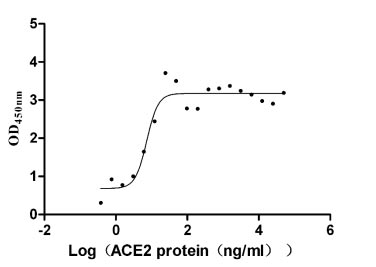
Recombinant Macaca fascicularis Angiotensin-converting enzyme (ACE2), partial (Active)
Express system: Mammalian cell
Species: Macaca fascicularis (Crab-eating macaque) (Cynomolgus monkey)
-
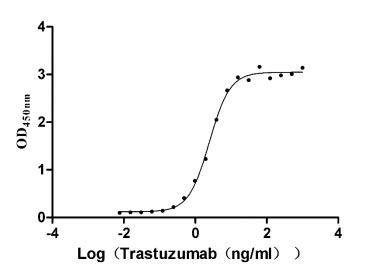
Recombinant Human Receptor tyrosine-protein kinase erbB-2 (ERBB2), partial (Active)
Express system: Mammalian cell
Species: Homo sapiens (Human)
-
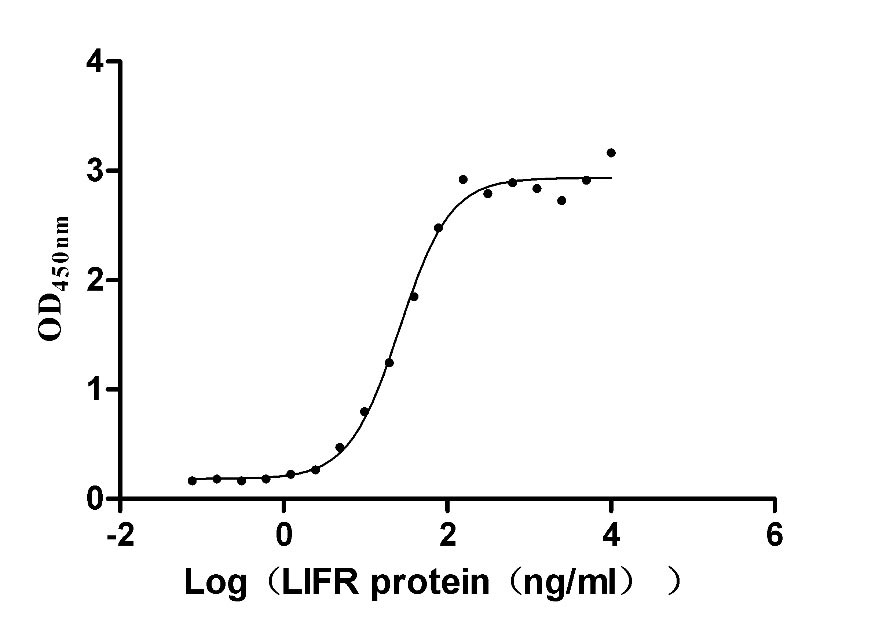
Recombinant Human Leukemia inhibitory factor (LIF) (Active)
Express system: Mammalian cell
Species: Homo sapiens (Human)
-
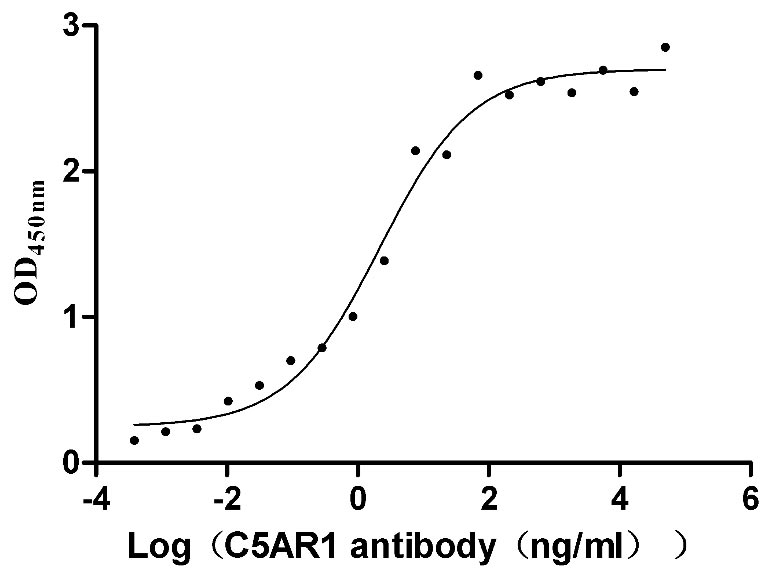
Recombinant Human C5a anaphylatoxin chemotactic receptor 1 (C5AR1)-VLPs (Active)
Express system: Mammalian cell
Species: Homo sapiens (Human)
-
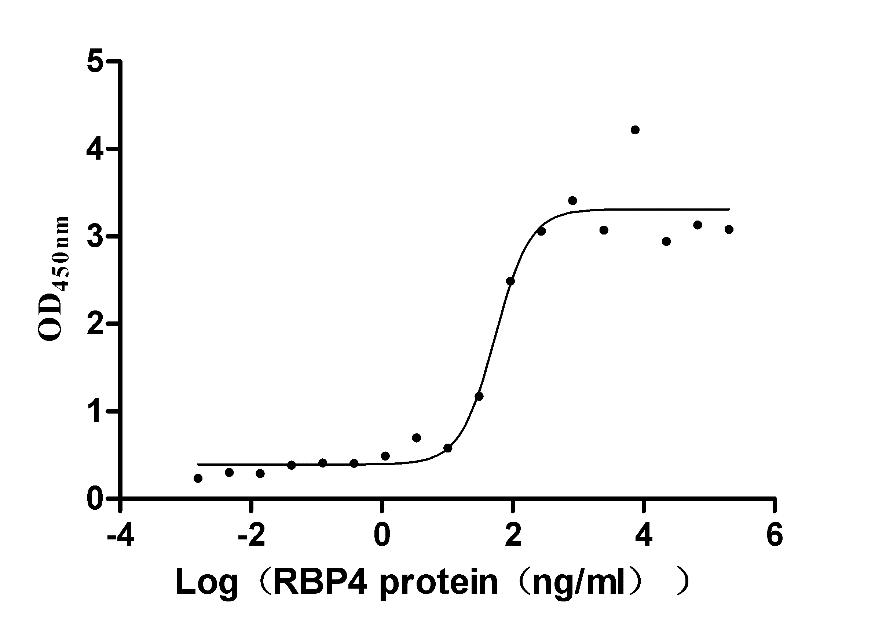
Recombinant Mouse Retinol-binding protein 4 (Rbp4) (Active)
Express system: Mammalian cell
Species: Mus musculus (Mouse)
-
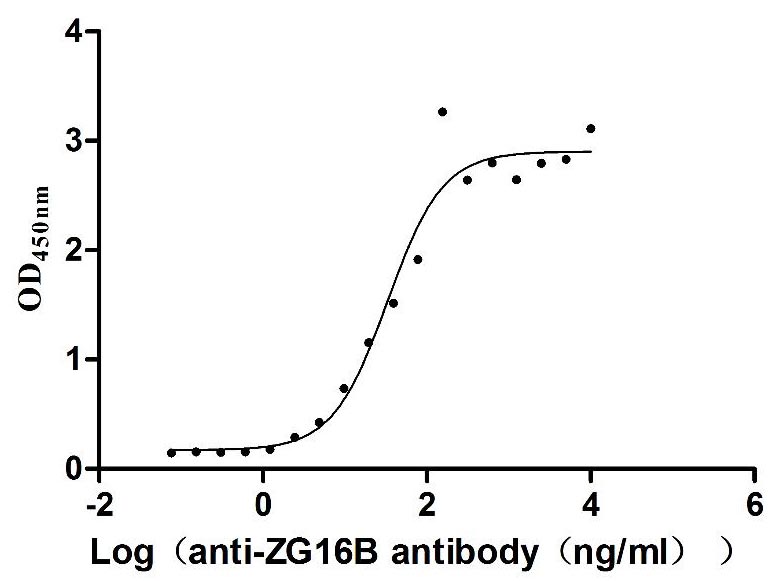
Recombinant Human Pancreatic adenocarcinoma up-regulated factor (ZG16B) (Active)
Express system: Mammalian cell
Species: Homo sapiens (Human)
-
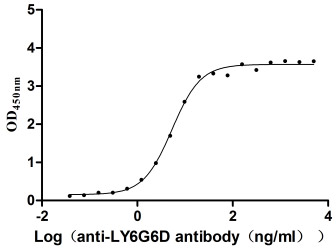
Recombinant Macaca fascicularis lymphocyte antigen 6 family member G6D (LY6G6D) (Active)
Express system: Yeast
Species: Macaca fascicularis (Crab-eating macaque) (Cynomolgus monkey)
-
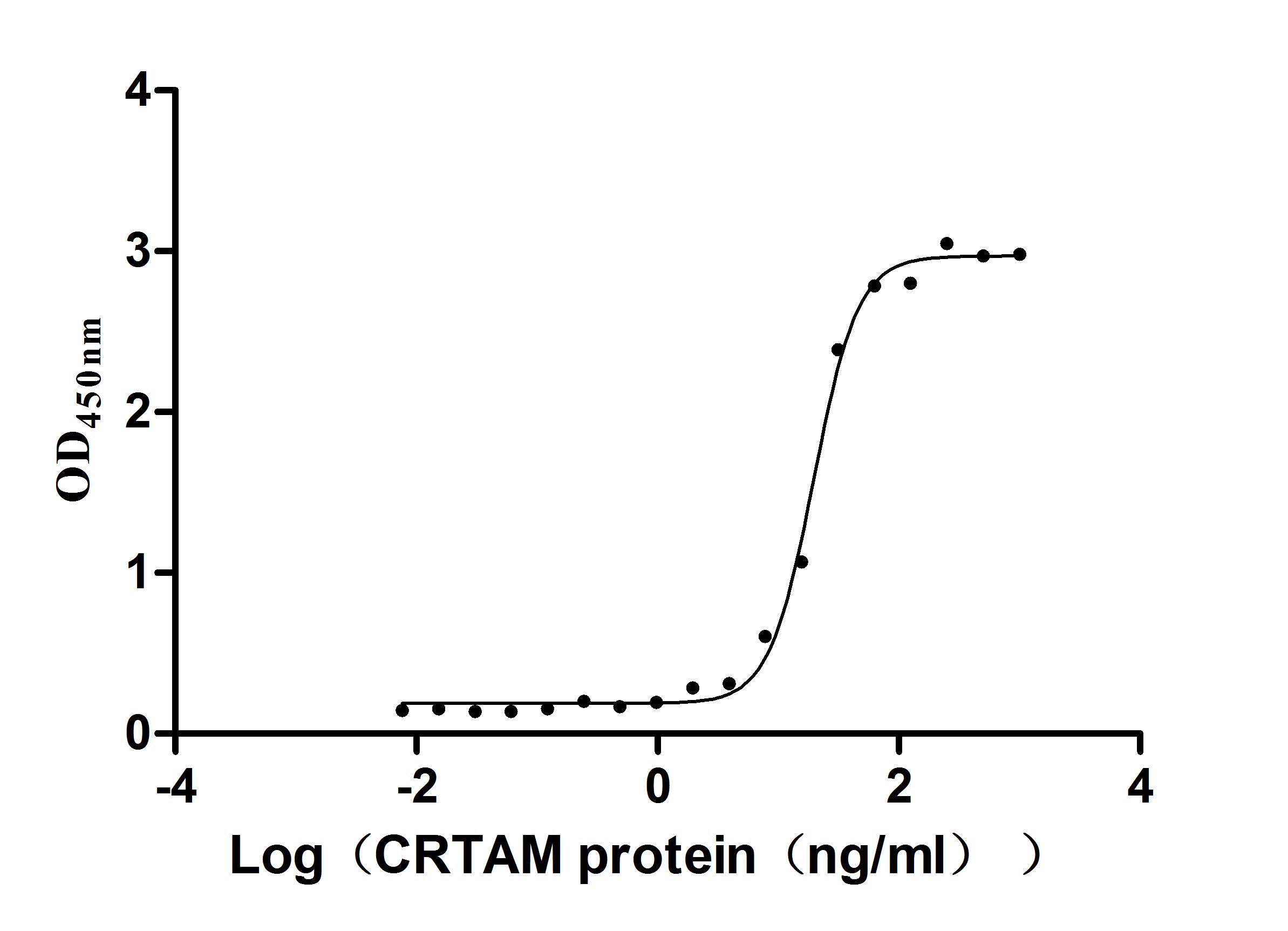
Recombinant Human Cell adhesion molecule 1 (CADM1), partial (Active)
Express system: Mammalian cell
Species: Homo sapiens (Human)